

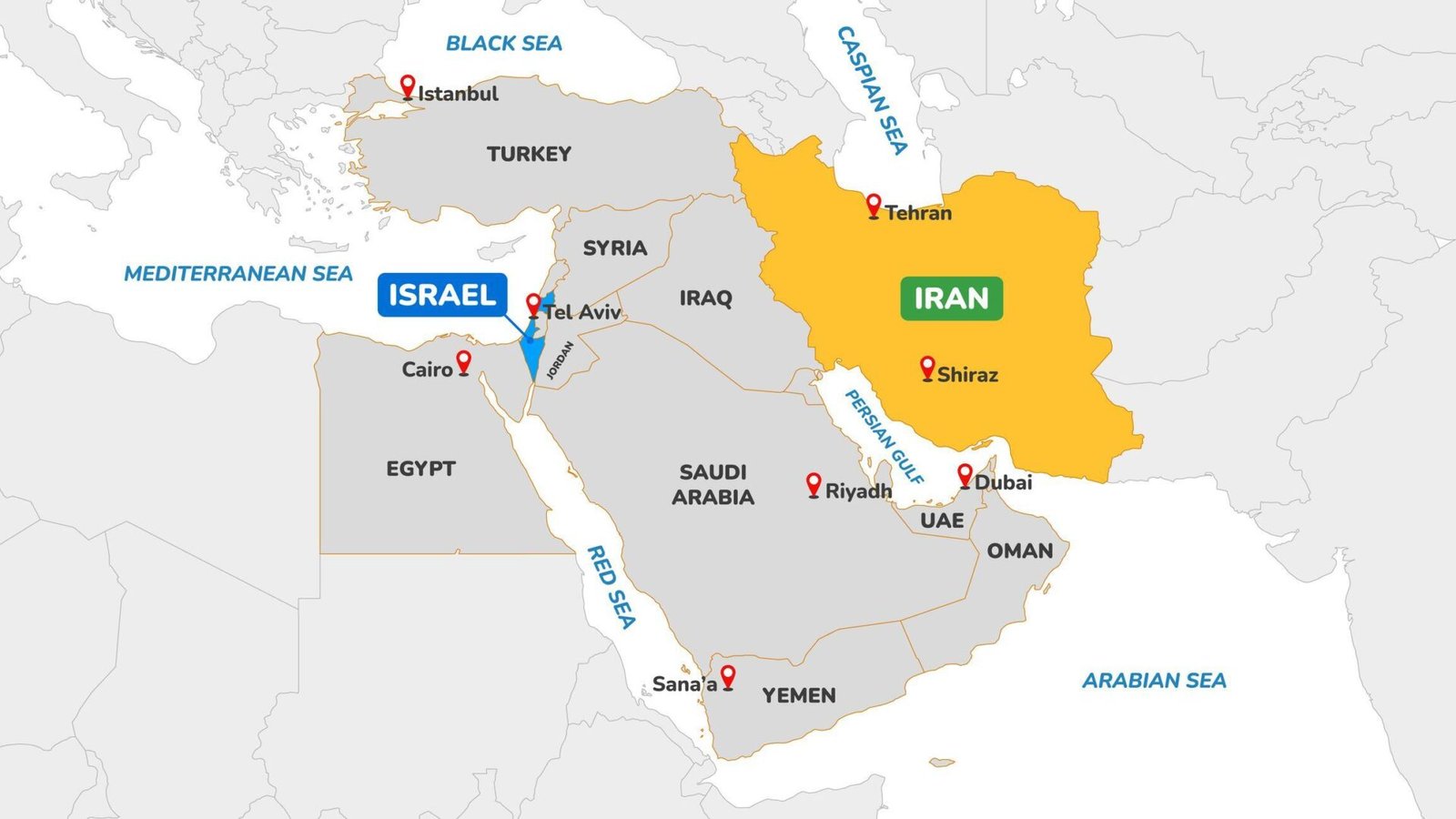
Iran–Israel War: Causes, Timeline, Global Impact, and What Happens Next
The conflict between Iran and Israel has become one of the most dangerous geopolitical crises in the modern world. What began as decades of hostility and proxy warfare has escalated into direct military confrontation, drawing in global powers and threatening stability across the Middle East and global energy markets.
This article explains the history, causes, major events, military developments, global consequences, and future implications of the Iran–Israel war.
1. Historical Background of the Iran–Israel Conflict
Interestingly, Iran and Israel were once allies. From Israel’s creation in 1948 until the Iranian Revolution of 1979, the two countries maintained diplomatic and economic ties.
However, relations dramatically changed after the revolution when Iran became an Islamic Republic under Ayatollah Khomeini. The new regime adopted a strong anti-Israel ideology and refused to recognize Israel as a legitimate state.
Since then, tensions have been driven by several factors:
- Ideological hostility
- Iran’s support for anti-Israel militant groups
- Nuclear weapons concerns
- Competition for regional influence
For decades, the two countries fought a “shadow war” involving cyber attacks, assassinations, sabotage operations, and proxy conflicts rather than direct battles.
2. The Nuclear Issue: Core Trigger of the Conflict
One of the biggest drivers of the Iran–Israel conflict is Iran’s nuclear program.
Israel believes that Iran’s nuclear activities could eventually lead to the development of nuclear weapons, which Israel views as an existential threat.
Key developments include:
2015 Nuclear Deal (JCPOA)
Iran signed the Joint Comprehensive Plan of Action (JCPOA) with major powers including the United States, Russia, China, and European countries.
The deal:
- Limited Iran’s nuclear program
- Allowed international inspections
- Reduced economic sanctions on Iran
Experts believed the deal would delay Iran’s ability to build nuclear weapons by at least a decade.
However:
- The United States withdrew from the agreement in 2018
- Sanctions were reimposed
- Iran gradually resumed nuclear enrichment
This increased tensions with Israel.
3. Growing Tensions Before the War (2023–2024)
Several major events intensified hostility before the war.
Israel–Hamas War (2023)
The October 7 attacks by Hamas triggered a major war between Israel and Hamas in Gaza. Iran supported several groups opposing Israel across the region.
Iran’s Regional Influence
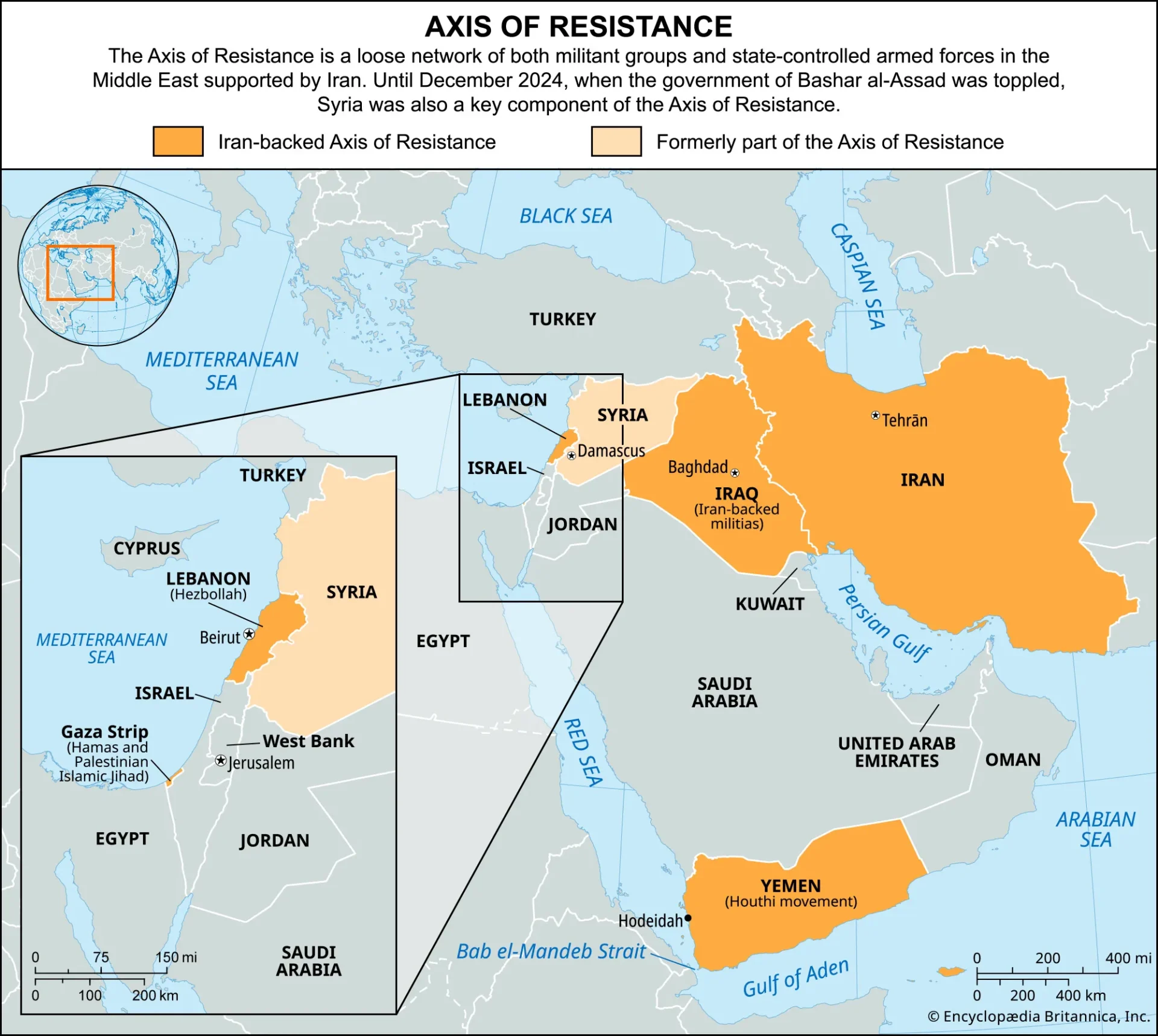
Iran expanded its network of allied militant groups often called the “Axis of Resistance.”
These include:
- Hezbollah (Lebanon)
- Hamas (Gaza)
- Shiite militias in Iraq
- Houthis in Yemen
These groups frequently attacked Israeli and Western targets.
The network also includes Palestinian Islamic Jihad in Gaza, and Syria historically served as a key logistical hub for the alliance.
Direct Attacks Begin
Iran and Israel began direct military exchanges in 2024, including missile and drone strikes.
The situation escalated dramatically in 2025.
4. The 2025 Iran–Israel War (The “12-Day War”)
In June 2025, tensions erupted into a full-scale war between Israel and Iran.
Start of the War
On June 13, 2025, Israel launched large-scale airstrikes against Iranian targets.
The attacks targeted:
- Nuclear facilities
- Military bases
- Missile infrastructure
- Government and military leadership
Several high-ranking Iranian officials and nuclear scientists were killed.
Iran’s Response
Iran retaliated with massive missile and drone attacks against Israel.
Missiles struck areas including:
- Tel Aviv
- Haifa
- Northern Israel
Many missiles were intercepted by Israel’s Iron Dome and other air defense systems.
Casualties
During the 12-day war:
- More than 600 people were killed in Iran
- Dozens were killed in Israel
The conflict lasted until June 24, 2025, when a ceasefire was negotiated.
5. Renewed Escalation in 2026
Despite the ceasefire, tensions remained high.
In February 2026, the conflict escalated again when the United States and Israel launched a large military operation against Iranian targets.
The operation targeted:
- Nuclear facilities
- Missile bases
- Iranian military leadership
Some reports suggested that Iran’s Supreme Leader Ayatollah Ali Khamenei may have been killed during the attacks, although the situation remains unclear.
Iran responded by launching missiles against:
- Israel
- U.S. military bases
- Allied countries in the Middle East
The war quickly expanded across the region.
6. Military Developments During the War
The conflict has involved modern warfare technologies.
Missiles and Drones
Iran has used:
- Ballistic missiles
- Cruise missiles
- Long-range drones
Israel has relied heavily on:
- Iron Dome
- Arrow missile defense
- David’s Sling system
Airstrikes
Israel conducted extensive airstrikes targeting:
- Iranian nuclear infrastructure
- Missile launch sites
- Military commanders
Naval Conflict
A major escalation occurred when a U.S. submarine sank an Iranian warship, triggering further retaliation.
7. Regional Expansion of the Conflict
The war has not remained limited to Iran and Israel.
Fighting and tensions have spread to:
- Lebanon
- Syria
- Iraq
- Gulf countries
- The Persian Gulf
Attacks have targeted energy infrastructure and military bases across the region.
This has raised fears of a wider Middle East war.
8. Economic Impact of the War
The conflict has already created major economic consequences.
Israel’s Economy
Israel’s economy is losing about $3 billion per week due to war-related restrictions and mobilization.)
Schools have closed and many businesses are operating under emergency conditions.
Global Oil Prices
The war has threatened shipping routes near the Strait of Hormuz, one of the world’s most important oil supply routes.
As a result:
- Oil prices have surged
- Energy markets have become volatile
Experts warn that prolonged conflict could trigger a global energy crisis.
9. Global Political Reactions
Many countries have responded to the crisis.
United States
The U.S. has supported Israel and participated in strikes on Iran’s nuclear infrastructure.
Europe
European leaders have urged de-escalation and diplomacy.
Middle East
Countries such as Saudi Arabia, Qatar, and the UAE have been placed on high alert due to regional instability.
The United Nations has held emergency meetings to address the crisis.
10. Possible Future Scenarios
Experts believe several outcomes are possible.
1. Limited War
The conflict may remain limited to airstrikes and missile exchanges.
2. Regional War
If Hezbollah, Gulf states, or other actors become heavily involved, the war could expand across the Middle East.
3. Regime Change in Iran
Some leaders believe the conflict could weaken Iran’s government and lead to political changes.
4. Diplomatic Resolution
International pressure could lead to:
- ceasefire agreements
- new nuclear negotiations
- regional security deals
11. Why This Conflict Matters to the World
The Iran–Israel conflict is not just a regional issue.
It affects:
- Global oil supply
- International security
- Nuclear proliferation risks
- Middle East stability
- Global financial markets
If the conflict escalates further, it could become one of the most consequential geopolitical crises of the 21st century.
✅ Conclusion
The Iran–Israel war represents the culmination of decades of ideological hostility, nuclear tensions, and regional power struggles. What began as covert operations and proxy battles has now evolved into direct military confrontation with global implications.
The coming months will determine whether the crisis evolves into a larger war or whether diplomacy can prevent a catastrophic escalation.